The investigation begins before there is a world
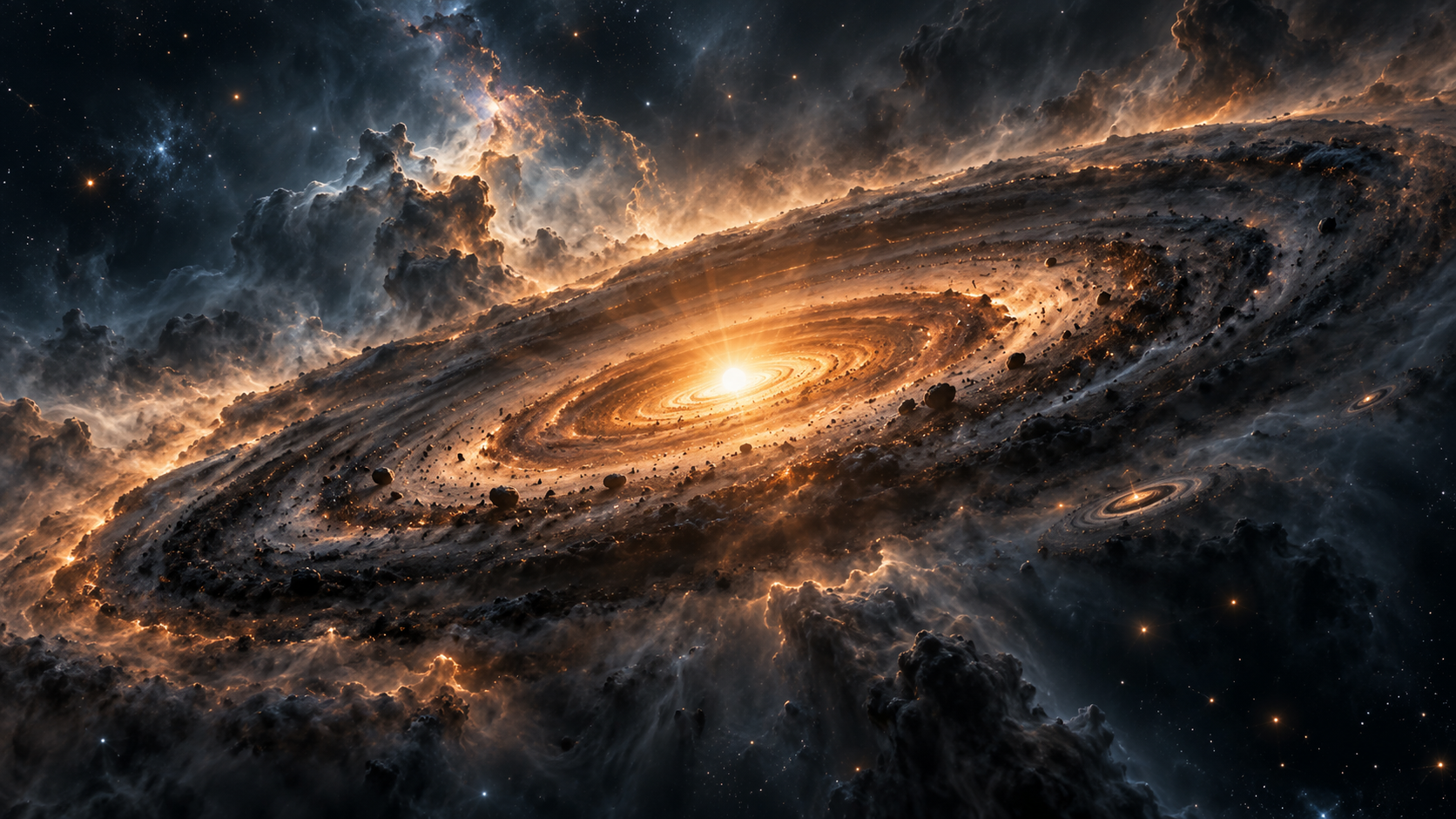
The search for life usually starts with a planet. But a planet inherits material from an earlier environment, and that inheritance may influence which chemical reactions become possible later. To investigate the beginning of the story, astronomers can examine the gas and dust surrounding very young stars.
On October 7, the University of Bern highlighted results from COMPASS, an ALMA observing program studying organic molecules in protostellar systems. Its release describes an unusual form of methanol with all four hydrogen atoms replaced by deuterium, alongside unexpectedly widespread methanol maser activity around low-mass protostars. [1]
A molecule as a record of conditions
Deuterium is a heavier isotope of hydrogen. Comparing differently substituted molecules lets researchers investigate the chemical conditions from which planetary material emerges. The release connects the fully deuterated methanol detection with IRAS 4A2 and identifies the associated research papers in Astronomy & Astrophysics. [1]
The useful question is therefore not whether methanol is alive. It is what the molecule’s variants can reveal about the history of the material. A chemical inventory can help reconstruct an environment without containing a biological organism.
An organic molecule is not a living system
The word organic can make an observation sound closer to life than it is. Carbon-bearing chemistry provides ingredients and reaction pathways; a living system would involve a much more demanding combination of organization and activity.
For an archive reader, the important boundary is between measuring material and establishing what eventually happens to it. These observations do not show cells, metabolism or an inhabited planet.
Why compare multiple stellar nurseries?
The program’s broader value is comparative. If the starting chemical conditions vary, future research can ask which differences persist as stars and planets develop. Bern describes follow-up work on whether molecular ingredients survive or transform along that route. [1]
A productive way to read such results is to ask which links in that route were measured and which remain proposed. Finding an ingredient near a young star does not, by itself, demonstrate its later delivery to a habitable surface.
A new file in the origin-of-life archive
This result belongs in the earliest chapter of the life-search story: the assembly of chemical possibilities. Its attraction is the opportunity to connect environments that are often discussed separately, from stellar birthplaces to future planetary chemistry.
The next question for readers to follow is whether those connections become measurable. The mystery is not a hidden organism in a telescope image. It is how a universe capable of making complex molecules sometimes produces a place where chemistry becomes biology.