
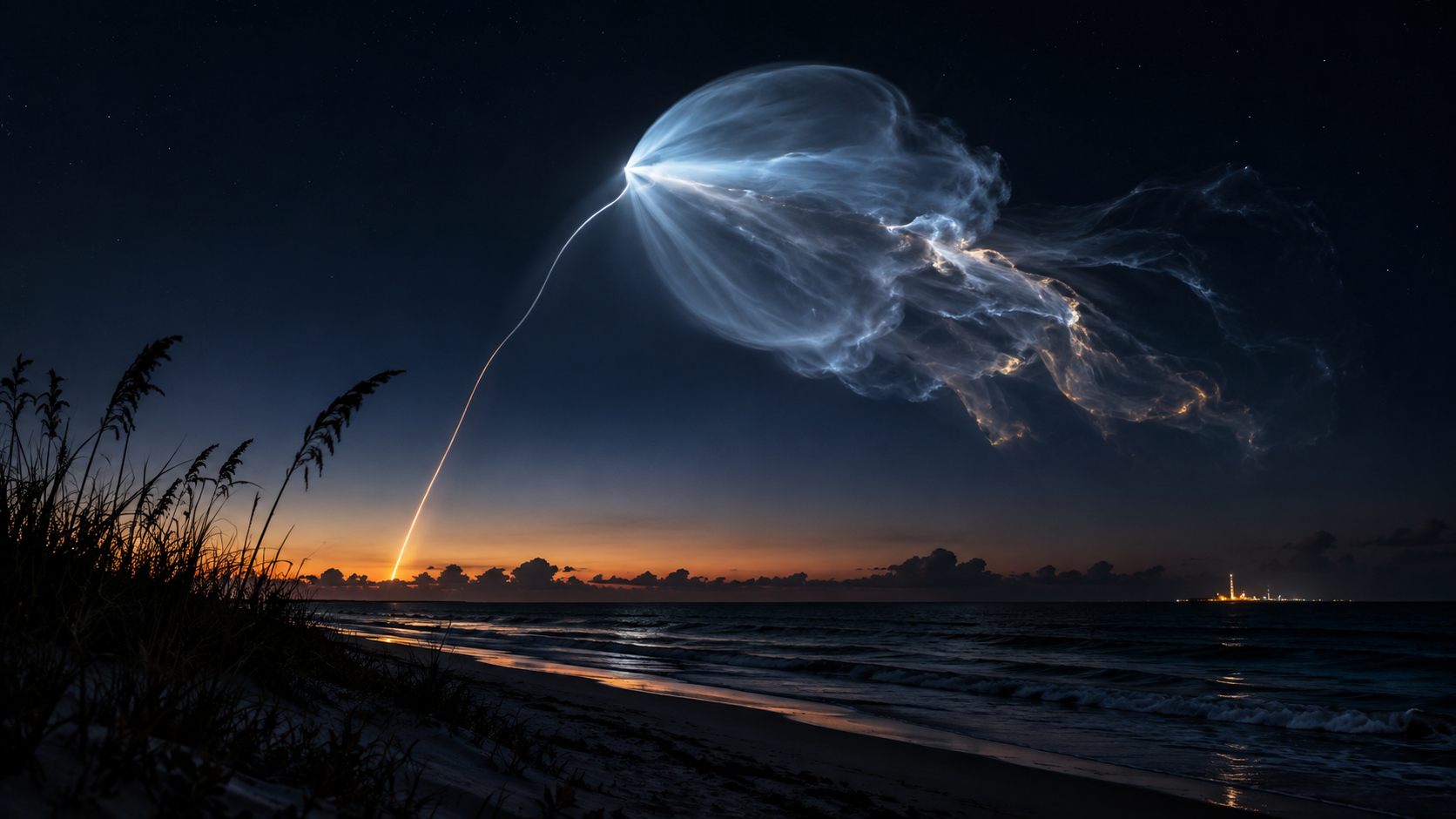
An extraordinary sight with an identifiable source
A luminous shape hanging across a predawn sky can look like something arriving from somewhere else. The October 13, 2026 display had that visual power. Its identity, however, does not depend on an alien interpretation: NASA identifies the glowing structure as exhaust from a Falcon 9 carrying a Dragon spacecraft. [1]
That distinction leaves the spectacle intact. A real photograph can show something astonishing without showing an unknown vehicle. The question is whether the explanation accounts for the observation, not whether the image still feels mysterious after the explanation is supplied.
What launched that morning
NASA records liftoff at 6:33 a.m. EDT from Space Launch Complex 40 at Cape Canaveral Space Force Station. The flight was SpaceX’s 35th commercial resupply mission for NASA, carrying scientific investigations, supplies and equipment toward the International Space Station. [1]
Coverage published by Digital Camera World on October 14 described photographs and videos spreading on social media after the event. That reporting supports calling the imagery widely discussed; it does not provide a verified ranking of the most searched TikTok videos or Instagram Reels. [2]
Why the plume glowed above a dark landscape
The essential ingredient is the different illumination of the ground and the high-altitude exhaust. NASA explains that a launch near sunrise or sunset can put the plume in sunlight while observers remain in darkness. The illuminated material then stands out as a broad glowing shape. [1]
NASA Science has described the same geometry in an earlier launch example, identifying the exhaust as mostly water vapor and carbon dioxide. That earlier image is useful explanatory context, not another photograph of the October 13 event. Keeping those dates separate prevents an old illustration from becoming supposed new evidence. [3]
What the images establish
Here, the underlying event and the proposed explanation are connected by an identified mission and a statement from NASA. This is a different evidential position from a short, unattributed clip of a distant light with no dependable location or time.
It would still be careless to apply the explanation to every glowing shape circulating under the same hashtag. A repost may show another date, another launch or an unrelated object. The October identification belongs to the documented October event.
Keep the spectacle; restore the context
A useful archive presentation would place the striking image beside the launch date, the mission name and a short description of the lighting effect. If a photograph has been enhanced, cropped or used as an illustration, its caption should make that clear.
The space jellyfish offers a satisfying result: unusual-looking evidence with an explanation readers can follow. It is a reminder that human spaceflight can make the sky unfamiliar. The glow was real, the response was understandable, and an extraterrestrial origin is unnecessary to explain this particular display.