
A recollection with an archival lead
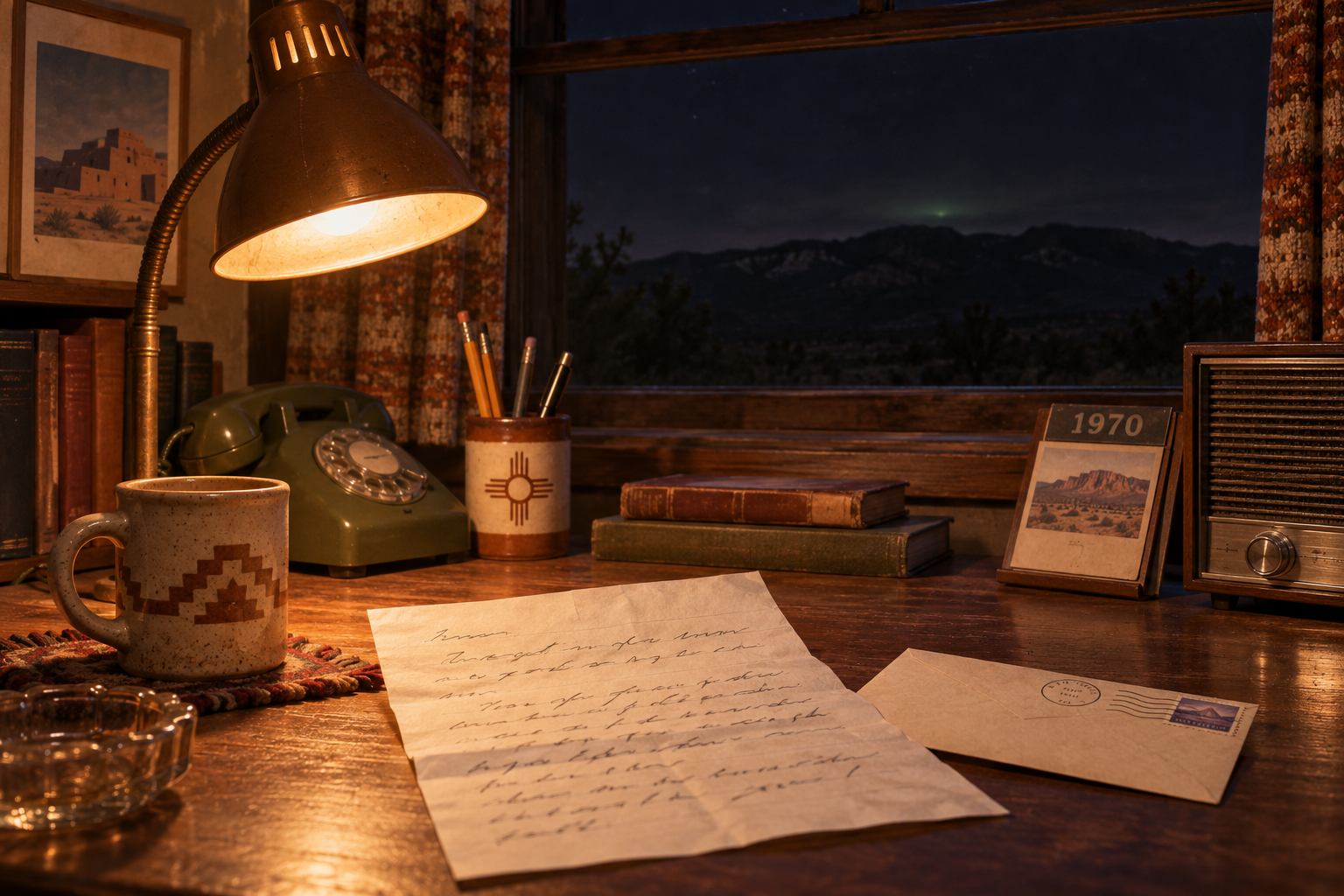
An old letter can preserve an experience and also reveal how much its writer no longer remembers. A 23 November 1970 account in the Department of Energy’s published correspondence recalls unusual lights around Los Alamos. Its evidential value includes that admission of uncertainty, rather than depending on an exceptionally precise memory. [1]
The writer describes green lights during 1948–1951, often in the evening near the Jemez Mountains, and recalls another observation involving several objects in formation. The letter says exact times and dates cannot be supplied from memory and suggests consulting Protective Force records. NBC revisited the correspondence in its May files reporting. [1][2]
A suggestion is not a recovered log
The distinction is important: a letter referring readers to security logs is not itself the missing logbook. It provides a direction for further research. Nor does a scientist’s interest in a report demonstrate that the reported lights were examined with scientific instruments or identified as extraordinary technology.
Our assessment: the next strong contribution would be a dated entry that could be compared with this recollection. Weather, astronomical observations and other contemporaneous reports might help, but should not be imagined into the file. A later narrative and an independent record made on the night would carry different kinds of information.
Do not turn the location into the conclusion
Los Alamos gives the story a powerful association with nuclear history. That association cannot substitute for a demonstrated connection between the lights and any nuclear activity. Likewise, grouping every green-light account under one label risks merging unrelated observations. This article concerns a particular surviving letter and the questions it raises. It preserves a witness’s recollection, identifies a possible research trail and leaves the physical explanation open where the reviewed record does not settle it.